The vicious circle of climate politics
Climate protection is trapped in a vicious cycle of the diffusion of responsibility, national interests, and global necessities.

Many believe that climate protection is the responsibility of politicians, since they are responsible for legislation that serves the common good. Or they believe it's the responsibility of industry, from whose smokestacks the emissions ultimately originate. Or perhaps primarily the responsibility of the neighbor, who drives a larger car and flies far more often on vacation. Furthermore, many citizens are not even remotely aware of the enormous scale of the necessary greenhouse gas (GHG) reductions required to limit global warming to at least an acceptable level. For comparison: In Germany, the average per capita CO2 consumption is approximately 10 tons per year. To limit global warming to well below 2 degrees Celsius, we would have to reduce this to less than 2 tons. This corresponds to a required reduction of approximately 80 percent – across all areas of life!

That this cannot be managed through restrictions and sacrifices is obvious, since our consumption can only be reduced quantitatively to a very limited extent. Current policy tools, however, rely primarily on restricting our fossil fuel consumption through price increases. But price increases do not simultaneously create a sufficient number of realistic and sustainable alternatives for consumption and mobility. Moreover, a number of systemic and personal factors hinder adequate action in the face of the impending disaster.
Politics, industry, society - or the diffusion of responsibility
"Politicians can't fix it,industry doesn't want to fix it,
and we citizens are faced with an insurmountable task due to the sheer size of the problem.”

From a political perspective:
Besides party-political considerations, politics is always also interested in maintaining power and re-election - thinking is primarily in terms of legislative periods, and especially in our democratic system, a government is always dependent on the mass approval of the population. However, regulatory prohibitions and coercion do not find a societal majority. Furthermore, a government is heavily dependent on a well-functioning economy, which, however, does not want additional expenditures for climate protection. This is because such investments increase the price of domestic products, at least initially, and thus initially reduce competitiveness on the international market. This makes it very difficult to make forward-looking, global decisions. In summary, one can say that politics is bound by practical constraints and primarily supports its most powerful clientele. A government that wants to implement effective measures against climate change is therefore automatically committing political suicide. This makes it particularly difficult to act quickly and effectively in climate policy, given the urgency of the crisis. Often, much more than a minimal compromise cannot be achieved, as demonstrated, for example, by the bitterly contested discussions surrounding "Habeck's" Building Energy Act (GEG), the escalating dispute over the reduction of subsidies in the agricultural sector, or the recent debates about the impending reduction of CO2 fleet emission limits for the automotive industry.
This inherent entanglement of economics and politics undermines their actual mission - to act for the benefit of all people. It's a vicious cycle that makes sensible, forward-looking action, also in the interest of future generations, at least more difficult.
From the industry's perspective:
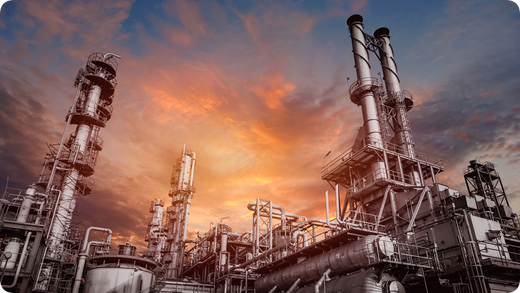
The primary goal of industry is growth and profit, not climate protection. After all, companies generally operate within legal frameworks, and restructuring production towards climate-friendly processes initially requires investments that impact competitiveness – also in an international context. While there is certainly interest in an environmentally friendly image, it remains to be seen to what extent consumers are willing to pay more for it. Manufacturers fear that their customers are unlikely to accept a higher price for genuinely CO2 free products and a clear conscience. Because the consequential costs of the damage caused by fossil fuels are still not factored into the price, and billions continue to be poured into their use, they appear (supposedly) more cost-effective from a business perspective. Therefore, no company can be expected to voluntarily make uneconomical decisions and thereby risk a competitive disadvantage. Furthermore, European industry is concerned about not being able to compete on price with manufacturers from, for example, China and the USA, who are subject to less stringent regulations. Consequently, industry sees little incentive to transform itself on its own. And the truth is: no industry produces for its own sake, but ultimately according to the demand of us all. Incidentally, the same applies to goods produced abroad (e.g., China). A short-sighted pursuit of profitability all too often takes precedence over environmental protection. This is the rule of capitalism and the increasingly deregulated market economy.
In summary :
" As soon as climate protection has to compete with short-term growth and profit interests, The money ALWAYS wins .

What role do we, as consumers, play?
Probably none of us citizens want unchecked climate change. But as soon as the necessary measures to combat it affect our personal comfort zone or our own wallets, acceptance of climate protection measures drops quickly and significantly. Moreover, the influence of the individual is very limited, and therefore quickly leads to resignation. Personal action or inaction has virtually no impact on the bigger picture. The lack of sufficient, easily accessible, climate-friendly consumption alternatives only exacerbates the problem.
The effect of wear and tear also plays a role. We are tired of the constant stream of new or recurring disaster reports. This leads to a desensitization - even to the greatest evils of our time. Superlatives lose their impact. Anyone constantly bombarded with terms like "catastrophe," "once-in-a-century flood," or "hottest summer on record" eventually stops listening. We're saturated - understandably so. Moreover, the climate crisis is often the elephant in the room, the one no one wants to see, because, after all, the glaciers aren't melting in our front yards. But looking the other way has rarely solved a problem. The crisis is the central threat to future prosperity. Yet it still doesn't receive the necessary attention. Of course, this problem is far from the only important top issue, but it influences and exacerbates many others in a causal relationship.
The idea that we simply need to wait until the market develops the right technologies to solve global warming, and that these will then save us in a timely manner, is dangerous wishful thinking. New technologies don't just appear out of thin air and then suddenly solve our problems. History in no way supports this assumption. Therefore, relying solely on the innovative market to save us from climate change is a new form of denial.
The pernicious debate about guilt, or rather the limits of restriction and renunciation
Despite all the diverse motivations for our hesitant action in the face of the crisis, the issue of climate protection should never be about blame. Blame in the sense of "Your consumption is worse than mine." No one should feel attacked. Because such finger-pointing leads to nothing but the inevitable division of our society. We all live within this system design that enabled the current state of our environment. Therefore, as a society, we must find our way out of this crisis together, without leaving anyone behind.
In this game, all participants are equally responsible in some way, yet no one is truly to blame. Therefore, we must change the rules of the game. This requires a paradigm shift - a systemic approach that takes into account all the sometimes very different life realities, individual consumption preferences, and conflicting interests of people, and intervenes only to the extent that is absolutely essential.
A model that sets ecological guardrails and decouples climate protection from the question of blame. By allowing each citizen to decide, through personal emissions budgets, how they integrate climate protection into their lives - not whether they do so. Furthermore, it enables maximum personal freedom of consumption choice, albeit within clearly defined ecological limits for everyone. Such a concept relieves policymakers of the need to enact, implement, and monitor detailed and often unpopular regulatory measures. Relying on voluntary, individual reduction measures is the homeopathic approach to climate policy.
"Too little and too late" - why European Emissions Trading System (EU-ETS) and national CO2 pricing are not enough
With the current tools of the EU Emissions Trading System and CO2 pricing, we will likely miss our climate target. Neither price increases nor restrictions will result in a sufficient number of climate-friendly goods being produced. Moreover, many rightly perceive the price surcharges as unfair because they disproportionately burden lower-income households.

source: IPCC AR6
Furthermore, policymakers are constantly faced with the challenge of balancing compliance with agreed-upon emission reduction quotas with national economic interests. If emission allowances for industry are made too scarce, or their prices rise too sharply, not only is international competitiveness jeopardized, but it also leads to energy-intensive companies increasingly relocating their production abroad to countries with less stringent regulations (carbon leakage ). To mitigate this to some extent, allowances are still sometimes issued to companies free of charge. Nevertheless, goods produced using fossil fuels abroad still enter our economic sphere via imports, thus undermining our climate protection efforts.
Price increases do not create a sufficient number of necessary consumption options
Furthermore, the effectiveness of measures that aim to restrict consumption through price increases is regularly undermined. Whenever the outcry from the public, businesses, or even the opposition against these unpopular regulations becomes too great, they are simply watered down to the point of meaninglessness. Since January 2021, Germany has had a CO2 price on fossil fuels used for heating and transportation. This price increase is intended to send an additional price signal, thereby incentivizing more economical use of heating energy and gasoline. However, this has not led to a significant decrease in car use. And how could it? People still need to get from A to B, and not everyone has the option of switching to public transportation. To relieve the burden on citizens, various measures were considered, such as reducing the VAT on energy and fuels, abolishing the EEG surcharge, increasing the commuter allowance, paying energy allowances to those receiving housing benefits, etc. But all these understandable compensation measures counteract the actual goal of reducing consumption by increasing prices.
All of this unfortunately demonstrates all too clearly that the wishful thinking of using monetary price signals to effect the necessary behavioral changes among consumers has failed miserably. Furthermore, the approach of shaping climate policy through increased consumption costs is counterproductive for several other reasons. In addition, there is the effect of price elasticity. According to the ironclad laws of the market, a price increase usually leads to a decrease in demand - but by no means to the same extent. Citizens may pay the surcharges reluctantly, but they do pay them - out of necessity. Therefore, it is also not true in the case of climate policy that price increases would sufficiently reduce, let alone limit, the (over)use of the atmosphere. Because, in principle, everyone can still emit without limit; only the costs of doing so increase. What is lacking is a concrete reduction of emissions through budgeting!
Why the climate crisis cannot be solved within the monetary system

he simplified equation "money = consumption = emissions" not only vividly illustrates the pervasive climate and emissions inequality between rich and poor, but also describes the inseparable causal link between wealth and climate-damaging emissions - as long as our consumer goods are not generally produced in a climate-neutral way. Price increases in the fight against climate change are of little use, however. This is because money saved through restrictions, abstinence, or more efficient technologies in one area is usually spent elsewhere - for example, on an extra vacation (rebound effect). This is another reason why it is essential to decouple effective climate protection, or rather our consumption-related emissions, from the monetary system - for example, through a complementary climate currency!
Lack of transparency regarding environmental costs
Moreover, our conventional currency alone is hardly suitable for transparently reflecting the burden our consumption places on ecosystems. Many products in our modern consumer society are very inexpensive to produce and consequently sold cheaply, but their production or operation is associated with high environmental costs. Furthermore, the CO2 surcharge included in the product price prevents the desired transparency, as it is almost entirely absorbed into the overall price. This makes it difficult for consumers to choose the more climate-friendly product.
All of this shows that neither emissions trading nor price increases will be enough to achieve the necessary emissions reductions and meet the climate target. A model is needed that can reconcile national interests with global necessities. Because drastically reducing emissions to respect planetary boundaries is not optional, but mandatory!
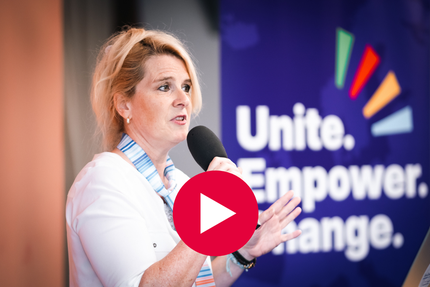
The following presentation, delivered during Volt’s European Party Congress 2026 in Bratislava, examines this systemic conflict of objectives in greater detail using current climate policy instruments as examples: specifically, the European Emissions Trading System EU-ETS as well as the CO₂ pricing, and the political hope that raising prices will lead to sufficiently rapid and socially just emissions reductions.
An effective and socially just alternative could be a counter-proposal from the NGO SaveClimate.Earth . Their proposed solution involves establishing a consistently polluter-pays system at the consumer level. Through personal, tradable CO2 budgets, and the resulting changes in the purchasing behavior of millions of consumers, the necessary pressure to change is built up on businesses, intrinsically motivating them to defossilize their production processes – towards significantly more green alternatives. After all, industry produces what we can (and do) buy with our limited budgets.
The climate crisis is a global, multi-causal, and complex problem. We cannot combat it with isolated regulations; instead, we need a scalable framework for action that allows us to respond swiftly and appropriately to ecological challenges. Only by shaping our economic, consumption, and lifestyles sustainably, and by giving equal weight to ecological and social considerations alongside economic ones, will we live up to our responsibility to future generations.

For this we need a paradigm shift ...
- which comprehensively records, transparently maps, and fairly accounts for consumption-related greenhouse gases.
- towards a system within which the individual can freely decide on his consumption behavior, but within clearly defined limits for everyone.
- which guarantees precise and flexible achievement of the climate target.
- towards a model that is relatively uncomplicated administratively and also contributes to reducing social inequality.
- away from measures that primarily rely on price increases, restrictions, and sacrifices, disproportionately affect lower-income households, and drive domestic emissions-intensive industries abroad.
- away from small-scale, often unpopular measures, towards personal, tradable emission budgets.
Political debates about regulations down to the smallest detail could become unnecessary, as consumers, through their purchasing decisions based on more affordable ecological prices, would trigger and support the necessary transformation processes in the economy. This is because the market-based approach, with a climate currency decoupled from the monetary system, automatically ensures the application of the most suitable methods and techniques that achieve the greatest emissions reduction with the least effort. And this occurs without the need for additional price increases or governmental or regulatory interventions.
The NGO SaveClimate.Earth - Organization for Sustainable Economy, has developed a concept for tradable personal emission budgets that could initially be introduced at EU level and gradually expanded worldwide.

There are answers to this,
- why emissions trading at the citizen level is superior to industry -wide certificate trading and national CO2 pricing..
- how personal tradable emission budgets could be the effective and socially just alternative to all current measures, and thus guarantee compliance with a set emission target.
- how the establishment of a complementary resource currency ECO (Earth Carbon Obligation) as a global CO2 equivalent could work.
- how the monthly payment of the ECO works as an ecological basic income in the form of a personal tradable CO2 budget. .
- how a separate emissions price tag in the climate currency ECO ensures that the climate impact of products becomes comparable.
- how we could pay for our individual CO2 consumption via our own climate account .
Copyright:
The copyright of all contents of this website lies solely with us. However, we expressly agree that the texts and graphics, including excerpts, may be used or distributed.